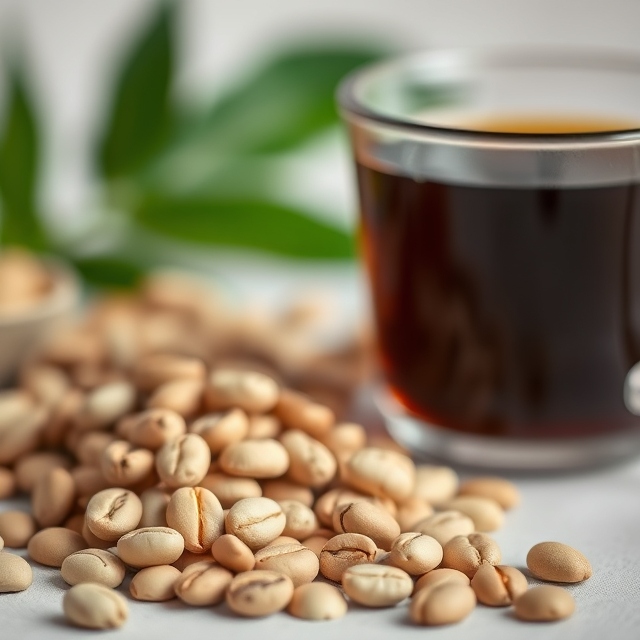
What is white coffee? In the American-style coffee context, white coffee is an exceptionally lightly roasted coffee with a pale appearance and a flavor profile that can differ significantly from conventional medium or dark roasts. The beans receive much less roast development, which helps explain their unusual color, flavor, density, and brewing characteristics.
Although the name can be confusing, white coffee is still coffee. It is not simply coffee mixed with milk, cream, or another white ingredient. The term refers to the way the coffee beans are roasted in the context discussed here.
What Is White Coffee?
White coffee is coffee roasted to a very light level, producing beans that can look pale yellow, tan, or light brown rather than the familiar deep brown of traditionally roasted coffee.
Roasting changes green coffee beans through heat. As roasting progresses, the beans develop more color, aroma, and roasted flavors. White coffee stops much earlier in that process.
Because of this limited roast development, the resulting coffee can retain characteristics that are less prominent in darker roasts.
The term should also be interpreted carefully because “white coffee” can mean different things in different coffee cultures. American-style white coffee should not automatically be treated as the same product as Malaysian white coffee, which has its own preparation and roasting traditions.
Why Is White Coffee So Pale?
The color comes primarily from the degree of roasting.
Green coffee beans start out relatively pale. As heat is applied, chemical and physical changes cause the beans to become progressively darker. More developed roasting produces the brown shades associated with familiar coffee.
White coffee is stopped much earlier, so its beans remain considerably lighter.
The pale appearance is therefore not an indication that milk has been added. It is a result of the roasting process itself.
How Is White Coffee Different From Regular Coffee?
The main difference is roast development.
A conventional coffee may be roasted to a light, medium, or dark level depending on the desired flavor. White coffee is roasted unusually lightly, which creates a different balance of characteristics.
| Characteristic | White Coffee | Conventional Darker Roast |
|---|---|---|
| Appearance | Pale or light | Brown to dark brown |
| Roast development | Very limited | More developed |
| Bean density | Often higher | Generally lower than very lightly roasted beans |
| Flavor | Nutty, mild, unusual | More roasted, rich, smoky, or bitter |
| Roast character | Relatively subtle | More pronounced |
| Brewing considerations | May require special attention | Familiar to most home brewers |
The distinction is not simply about color. The roasting process changes how the beans taste, behave during grinding, and respond to brewing.
What Does White Coffee Taste Like?
White coffee can have a mild, nutty, grain-like, or peanut-like character. Some drinkers may also notice herbal or lightly developed flavors.
The exact taste depends on the coffee itself, including its variety, origin, processing, roast profile, grind, and brewing method.
Compared with a dark roast, white coffee generally has less of the heavy smoky or deeply roasted character that many people associate with traditional coffee.
That does not mean every cup will taste mild in every respect. Brewing concentration and extraction can still produce an intense beverage.
Why Are White Coffee Beans So Hard?
Very lightly roasted coffee beans can be denser and harder than beans that have undergone more extensive roasting.
As coffee is roasted, physical changes occur within the bean. More developed roasting alters the bean’s structure and contributes to the familiar brittle texture of roasted coffee.
White coffee’s dense structure can make grinding more demanding. Some ordinary home grinders may struggle with particularly hard beans, which is why the grind format can be an important consideration when buying this style of coffee.
Is White Coffee the Same as a Light Roast?
Not necessarily.
“Light roast” is a broad roast category, while white coffee generally refers to an unusually light roast style. The exact terminology used by coffee sellers can vary.
A typical light roast and an exceptionally light white coffee can therefore have noticeably different physical characteristics and flavor profiles.
The safest approach is to examine the actual roast description rather than assuming that every product labeled “light roast” is equivalent to white coffee.
Does White Coffee Have More Caffeine?
The answer is more complicated than simply comparing bean color.
Caffeine content in a finished cup depends on factors such as the coffee variety, amount of coffee used, serving size, brewing method, and extraction. Roast level alone does not provide a reliable way to determine exactly how much caffeine will be in a particular cup.
For example, changing the amount of ground coffee used can alter the caffeine delivered in a serving even when the roast remains unchanged.
This is why claims about white coffee being “stronger” should be separated into different meanings: stronger flavor, higher concentration, and higher caffeine are not necessarily the same thing.
How Is White Coffee Brewed?
White coffee can be prepared using several common brewing methods, including espresso, drip coffee, and French press.
The important consideration is that its unusual density and roast level can affect grinding and extraction.
For example, espresso requires a fine grind and controlled extraction, while French press normally uses a much coarser grind. Drip brewing falls between these approaches and provides another way to experience the coffee’s flavor.
Anyone exploring a product specifically made in this style can review White Coffee to understand how the particular coffee is presented and prepared.
Is the Same as a Flat White?
No.
A flat white is a prepared coffee beverage traditionally made with espresso and steamed milk. White coffee, in the context discussed here, refers to an unusually light roast of coffee beans.
The similar wording can cause confusion, but the two terms describe completely different things.
One describes a roast style, while the other describes a beverage preparation.
Who Might Be Interested in ?
White coffee can appeal to people who want to explore coffee beyond familiar medium and dark roasts.
It may be particularly interesting for:
- Coffee drinkers curious about unusual roast styles
- People interested in very lightly roasted coffee
- Home brewers who enjoy experimenting with different extraction methods
- Drinkers looking for nutty or distinctive flavor characteristics
- Coffee enthusiasts interested in how roasting changes bean structure and taste
It may take some adjustment for someone who is accustomed to strongly roasted coffee because the flavor can be quite different from what they expect.
Common Questions About
Is actually coffee?
Yes. In the context of American-style white coffee, it is coffee that has been roasted unusually lightly.
Why is it called ?
The name reflects the unusually pale appearance of the lightly roasted beans. It does not mean that milk or cream has been added.
Is under roasted?
It is extremely lightly roasted compared with conventional coffee. Whether someone describes it as “under roasted” depends on terminology, but its defining characteristic is very limited roast development.
Can you use an espresso machine?
Yes. White coffee can be prepared as espresso, provided the grinder and equipment can handle the dense beans and the brewing parameters are adjusted appropriately.
Is the same as Malaysian ?
No. The term can refer to different coffee traditions. American-style white coffee and Malaysian white coffee should be treated as distinct concepts rather than assumed to be identical.
The Bottom Line
White coffee is best understood as an unusually light-roasted coffee with a pale appearance and distinctive physical and sensory characteristics. Its limited roast development can produce flavors that differ from darker coffee, while its dense beans can make grinding and brewing somewhat different.
Once the term is separated from unrelated drinks such as flat whites and other regional coffee traditions, the concept becomes much easier to understand: white coffee is primarily about an unusually light approach to roasting and the different coffee experience that follows from it.