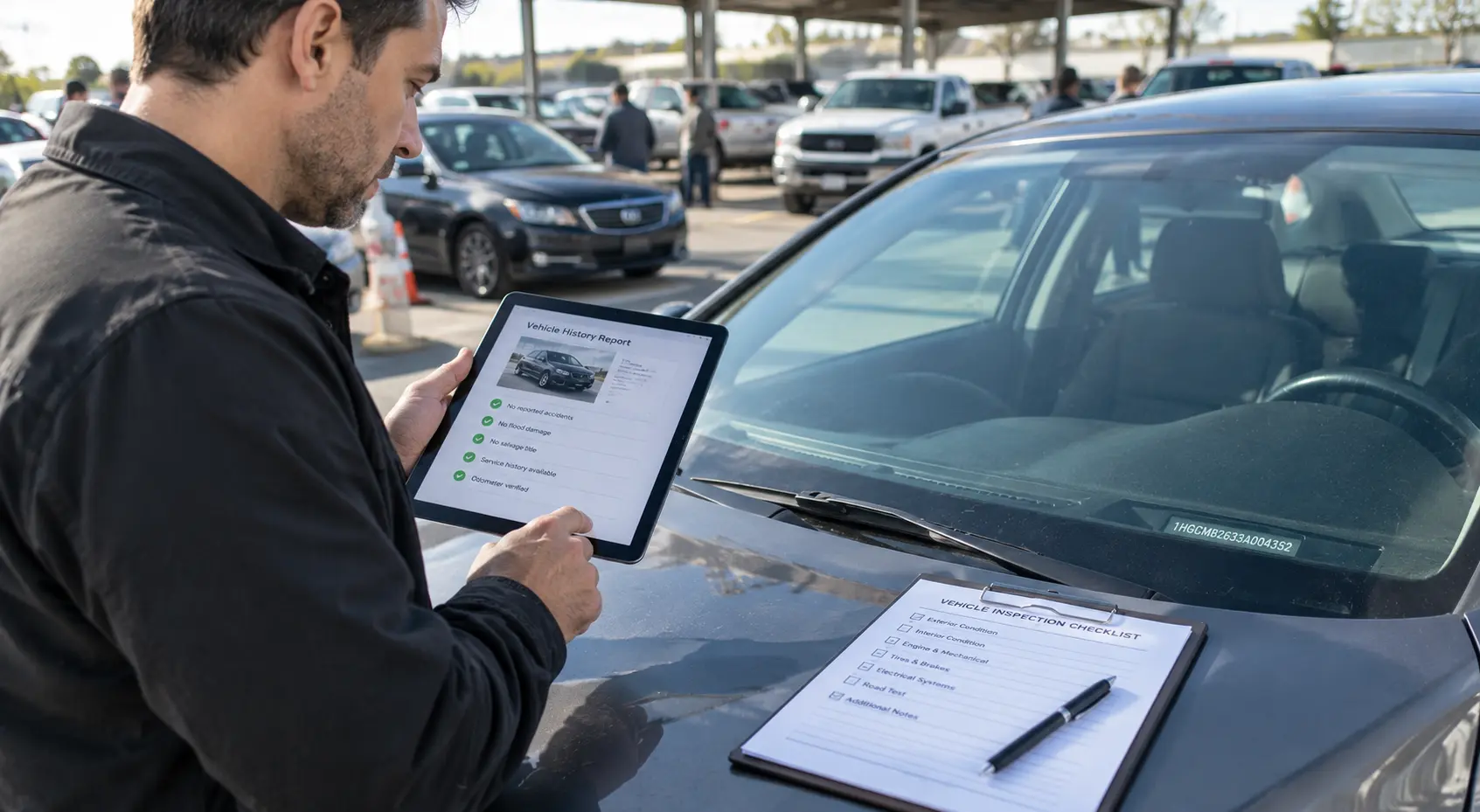
Knowing how to check vehicle history before auction bidding can help buyers identify potential problems that photographs or vehicle descriptions may not reveal. A vehicle may look well-maintained while having a history of accidents, title complications, inconsistent mileage records, or previous damage.
The most effective approach is to obtain the Vehicle Identification Number (VIN), review available history reports, verify title records, and compare the findings with the vehicle’s actual condition.
Although vehicle history research cannot guarantee a problem-free purchase, it provides valuable information for evaluating risk before making a financial commitment.
This guide explains which records matter, where to look for them, and how to recognize warning signs when researching auction vehicles.
Why Vehicle History Matters Before Auction Bidding
Vehicle auctions often involve limited opportunities to inspect or test-drive vehicles. As a result, buyers may need to make decisions using listing information, photographs, inspection reports, and independent research.
A vehicle history check helps reveal documented events that may affect safety, ownership, resale value, or future registration.
For example, two vehicles of the same model year may have similar mileage and exterior appearances. However, one might have a documented salvage history while the other has no reported title brands.
Understanding these differences helps buyers evaluate whether the asking price reflects the vehicle’s actual circumstances.
A history report is only one part of due diligence. Therefore, it should complement, rather than replace, a physical inspection whenever possible.
How to Check Vehicle History Before Auction Purchases
The research process begins with identifying the exact vehicle and confirming that the available records match its identification number.
Step 1: Obtain the Vehicle Identification Number
The VIN is a unique identifier that manufacturers assign to a vehicle. It generally consists of 17 characters on modern vehicles.
It helps distinguish one vehicle from another, even when they share the same manufacturer, model, and production year.
Buyers can often find the VIN:
- On the vehicle auction listing
- Near the lower corner of the windshield
- On the driver’s door-jamb label
- In the vehicle’s registration or title documents
Whenever possible, compare the VIN in the listing with the number physically displayed on the vehicle.
An unexplained mismatch may indicate a listing error or a more serious documentation problem.
Step 2: Check Vehicle History Reports Before Auction Bidding
A vehicle history report compiles information from participating government agencies, insurers, businesses, and other reporting sources.
Depending on the provider and available records, it may include previous title information, reported accidents, odometer readings, and certain ownership-related events.
Common commercial services include CARFAX and AutoCheck.
However, these services may have different data sources and reporting coverage. Therefore, the absence of an accident record does not prove that a vehicle has never experienced damage.
Step 3: Review Official Vehicle Title History
In the United States, the National Motor Vehicle Title Information System (NMVTIS) provides access to certain title, odometer, salvage, and total-loss information through approved providers.
NMVTIS can help buyers identify potentially significant events in a vehicle’s documented history.
However, it is not a complete mechanical inspection or comprehensive record of every repair.
Buyers should also verify any relevant state-specific title requirements.
Understanding Vehicle Title Records Before an Auction
A vehicle’s title documents establish important information about its legal ownership and classification.
Certain title brands can indicate circumstances that deserve additional investigation.
Clean Title
A clean title generally means the vehicle does not carry particular title brands, such as salvage or rebuilt, under the relevant jurisdiction’s records.
However, a clean title does not guarantee that a vehicle has never experienced damage.
Some accidents and repairs may not result in a title brand.
Salvage Title
A salvage title typically identifies a vehicle that meets a state’s criteria for salvage classification.
This may follow significant damage or another qualifying event, depending on local laws.
Such vehicles may require repairs, inspections, or additional procedures before owners can register them for road use.
Rebuilt Title
A rebuilt title generally indicates that a previously salvage-classified vehicle has completed the applicable process for receiving rebuilt status.
Nevertheless, rebuilt classification does not guarantee that every mechanical or structural concern has been resolved.
Buyers should investigate repair quality and applicable registration requirements.
How to Check Auction Vehicle Mileage and Odometer History
Mileage is an important factor in evaluating a used vehicle’s condition and market value.
However, buyers should not automatically accept the number displayed on the dashboard without supporting evidence.
Compare the current odometer reading with historical mileage records from inspections, registrations, service visits, and available vehicle history reports.
For example, suppose a vehicle’s documented mileage was 125,000 miles during an earlier registration, but its current listing shows 92,000 miles.
That discrepancy requires clarification before bidding.
Possible explanations include a recording error, instrument replacement, or odometer-related irregularity.
Buyers should not assume fraud without additional evidence. Instead, they should investigate unexplained inconsistencies.
Checking Accident and Damage History Before Auction Bidding
Reported accident information can help buyers understand whether a vehicle has experienced previous damage.
However, not every collision appears in commercial databases.
Some repairs occur without insurance claims, police reports, or records available to history-report providers.
Therefore, buyers should compare documented history with physical signs of previous repairs.
Potential warning signs include:
- Uneven body-panel gaps
- Inconsistent paint finishes
- Visible structural repairs
- Signs of water intrusion
- Unusual tire wear
- Missing or damaged safety components
These observations do not automatically establish serious damage. Nevertheless, they may justify a professional inspection.
Comparing Vehicle History With Auction Listings
An auction listing may describe a vehicle’s condition, mileage, title status, and other characteristics.
Buyers should compare those statements with independent records whenever possible.
For example, if a listing describes a vehicle as having a clean title but an available report identifies a salvage brand, the discrepancy should be resolved before bidding.
When researching vehicles through auction-related websites such as onlauction.com, buyers should first verify the website’s current listings and business information. Then, they should compare any available vehicle details with independent history sources.
A listing description should not replace official title documentation or a qualified mechanical inspection.
In addition, buyers should review the auction’s disclosure policies to understand what information the seller provides and which matters remain the buyer’s responsibility.
What a Vehicle History Report Cannot Tell You
Vehicle history reports are useful, but they have important limitations.
A report generally cannot establish the current mechanical condition of every vehicle component.
It may also omit:
- Unreported accidents
- Repairs completed without formal records
- Recent damage not yet reflected in databases
- Certain maintenance activities
- Mechanical problems unrelated to documented incidents
For this reason, a vehicle with no reported accidents may still require expensive repairs.
Likewise, a vehicle with a documented accident is not necessarily unsuitable for purchase. The severity of the damage, repair quality, current condition, and purchase price all matter.
Common Warning Signs When Checking Auction Vehicle History
Certain findings deserve closer attention before a buyer commits to an auction purchase.
| Warning Sign | Why It Matters |
|---|---|
| Inconsistent mileage | May indicate recording errors or odometer concerns |
| Salvage or rebuilt title | Can affect registration, insurance, and resale |
| Reported flood damage | May indicate electrical or corrosion risks |
| VIN discrepancies | Raise questions about vehicle identity or documentation |
| Repeated title changes | May require investigation into ownership history |
| Unexplained report conflicts | Suggest that additional verification is necessary |
A warning sign does not always mean a vehicle should be rejected.
However, buyers should understand the issue and its potential financial consequences before submitting a bid.
Can You Trust an Auction Vehicle History Report Completely?
No. Buyers should treat a vehicle history report as a research tool rather than a guarantee.
Its accuracy and completeness depend on the information available to the reporting provider.
For a more reliable evaluation, combine vehicle history research with title verification, seller disclosures, auction condition reports, and an independent inspection whenever possible.
If significant questions remain unanswered, declining to bid may be the most practical decision.
Final Thoughts on Checking Vehicle History Before Auction
Learning to check vehicle history before auction bidding helps buyers make decisions based on documented information rather than appearance alone.
VIN verification, title records, mileage comparisons, and accident history reports can reveal issues that deserve closer investigation.
However, no single database can confirm every aspect of a vehicle’s condition.
The strongest approach combines independent research with careful inspection and realistic expectations. By identifying potential problems before bidding, buyers can better evaluate vehicle value, reduce avoidable risks, and make more informed auction purchasing decisions.